


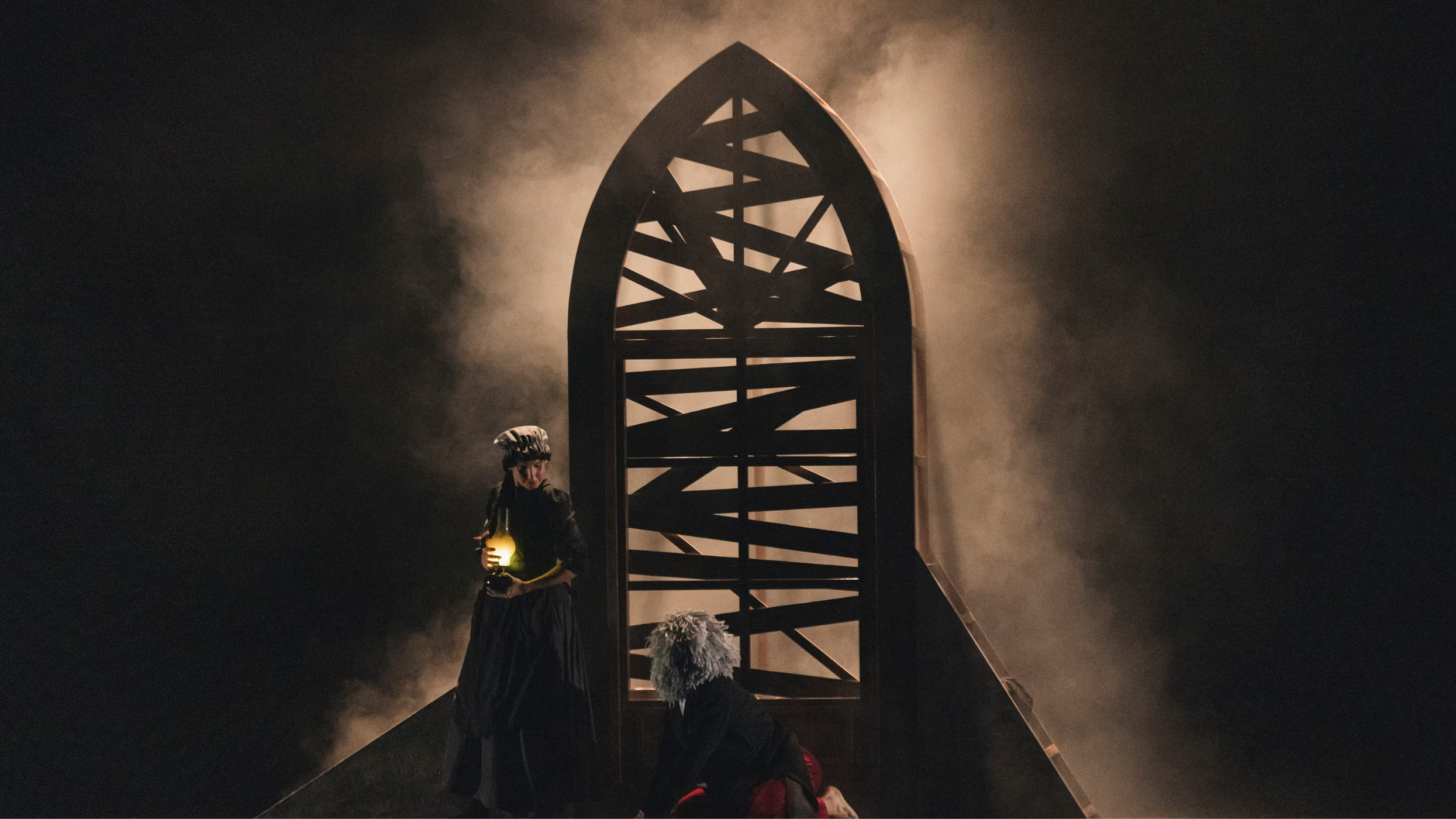
Dance – La umbría
Dance – La umbría at the Cuyás Theater, Las Palmas de Gran Canaria.
Alonso Quesada, one of the great figures of modernism in the Canary Islands, was born in 1886 and died prematurely in 1925. He was an author who cultivated all genres and, always taking into account the limitations of insularity, dared to immerse himself in literary avant-gardes.
He was deeply in love with theater, engaging with the performing arts not only as an author but also as an actor and a critic in various newspapers. He was part of an effervescent cultural scene; the city of Las Palmas de Gran Canaria then had a cultural climate far from ordinary for a provincial and insular city.
Many theater companies arrived on the Island on their way to America. Quesada, when writing La Umbría, necessarily had to reflect everything he saw, heard, read, and discussed with his friends. -French symbolism, Ibsen, Valle-Inclán, were propitious sources for the poet who had already used theatrical resources in both his poetry and his prose, but it is in La Umbría, a dramatic poem in three acts, where he fully dedicates himself to dramatic art.
It is a complex and ambitious work with two protagonists: health and illness. These two concepts are projected onto the characters: on one hand, the town enjoys vigorous health, while the Linares family, secluded in La Umbría, the name of the family mansion, live threatened by illness. This duality is also used by the author to construct an allegory reflected in two social classes: the common people and the affluent bourgeoisie or a kind of false aristocracy. Death, which becomes a constant threat to the family members, holds the value of failure rather than liberation.
Synopsis: Through movement and music, this contemporary dance show portrays illness, fear, death, and its ghosts in a drama set in La Umbría, the old mansion of the Linares family, on an Atlantic island during the second decade of the 20th century.
Related Events


