


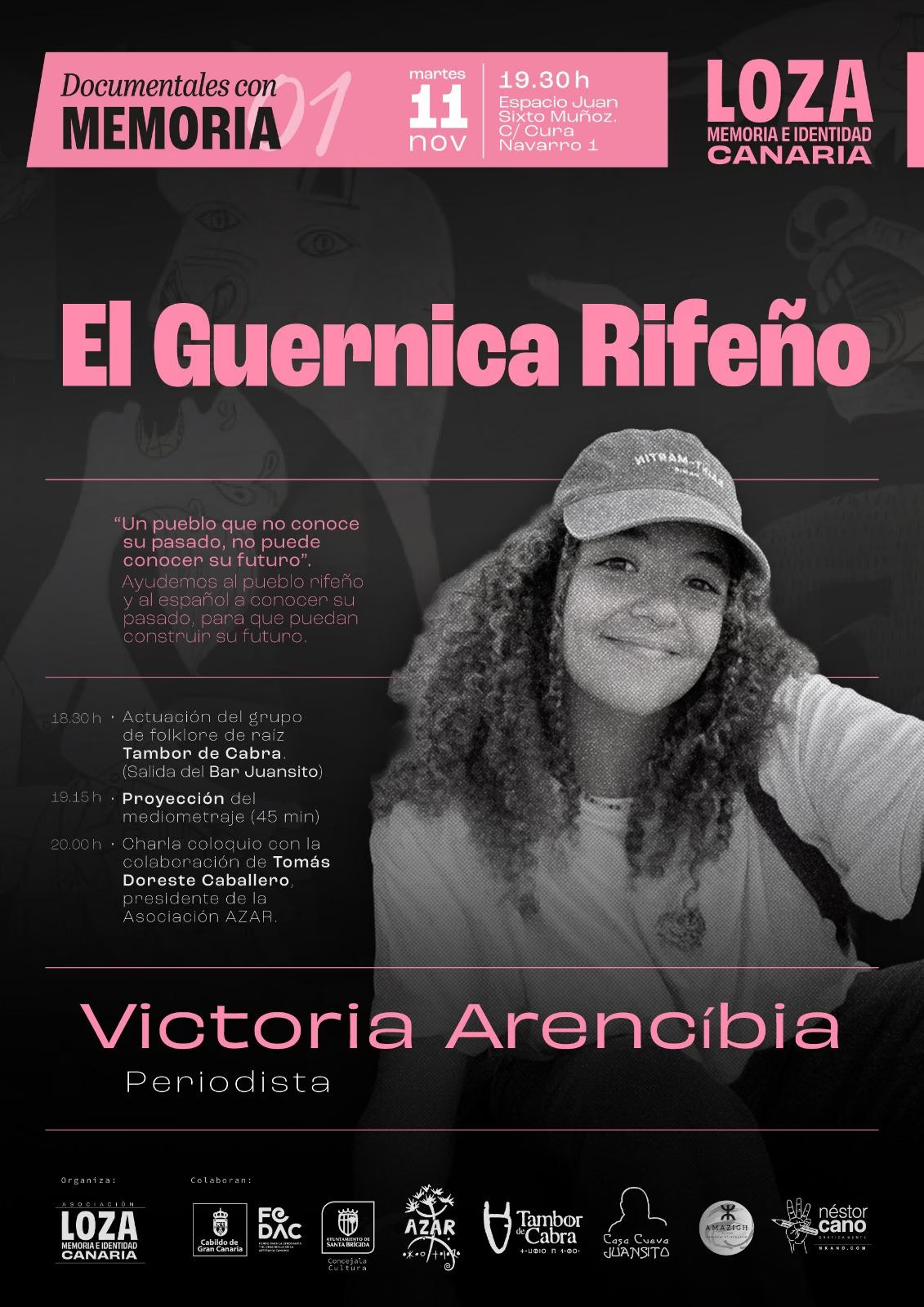
Documentary – The Riffian Guernica
The Association Loza Memory and Canarian Identity presents The Riffian Guernica at the Juan Sixto Muñoz Space in La Atalaya de Santa Brígida, Gran Canaria.
A new installment of the series Documentaries with Memory dedicated to rescuing and disseminating silenced episodes of recent history, with the purpose of strengthening collective memory and fostering critical reflection.
Program
18:30 h — Tambor de Cabra
The day will begin with a musical performance by the group Tambor de Cabra, which will bring a touch of roots and tradition, starting from Bar Juanesito and enlivening the atmosphere with popular Canarian sounds and rhythms.
19:15 h — The Riffian Guernica” (45 min)
The documentary work will be presented, exploring the echoes of conflict, memory, and identity in the Rif, establishing connections between art, resistance, and remembrance.
20:00 h — Talk-discussion
After the screening, a discussion will be held with the participation of Tomás Doreste Caballero, president of the AZAR Association, alongside journalist Victoria Arencibia, where the central themes of the documentary and its relevance for historical memory in the Canarian and Mediterranean context will be addressed.
Context
The Rif War (1919–1927) was one of the harshest and most significant colonial conflicts of the 20th century, little known to the general public. It broke out in 1919, when the Rifian tribes, led by Mohamed Abdelkrim El Khattabi, began an organized resistance against the Spanish occupation. After his victories, Abdelkrim proclaimed the Republic of the Rif in 1923, an independent state of modern inspiration, with its own administration, justice, and army. It was one of the first attempts in Africa to create an anti-colonial republic, which later inspired many liberation movements.
In 1925, Spain and France joined forces in a massive joint offensive to crush the rebellion. For the first time in history, systematic aerial bombardment against the civilian population and chemical weapons (mustard gas and phosgene) were launched on Rifian villages. This use of toxic gas —already prohibited by international conventions— was a deliberate strategy to destroy the resistance.
Through testimonies, archives, and careful journalistic work, Arencibia brings the memory of the Rif into dialogue. Her work seeks to build bridges between Rifian and Spanish memory, two histories intertwined by a shared colonial past that needs to be told with justice and sensitivity.
Related Events


